
Strong brand, but missing the proof that turns browsers into bookers.
Online shoppers — mix of comparison-shoppers and impulse buyers, primarily mobile
Persona template: E-commerce Shopper
86% would scroll or leave — mostly looking for pricing, reviews, or a reason to choose one destination over another
High — Clear audience reactions align with measurable design gaps
Needs work — Trust and pricing gaps blocking 86% of visitors
86% of visitors would scroll or leave because there's no pricing, no reviews, and no reason to act now. The search bar is clean and the brand is instantly recognizable — that gets users to the page, not through it. Comparison-shoppers explicitly called out missing star ratings and no differentiation from competitors. Without social proof and at least indicative pricing, this homepage is an awareness tool, not a conversion engine.
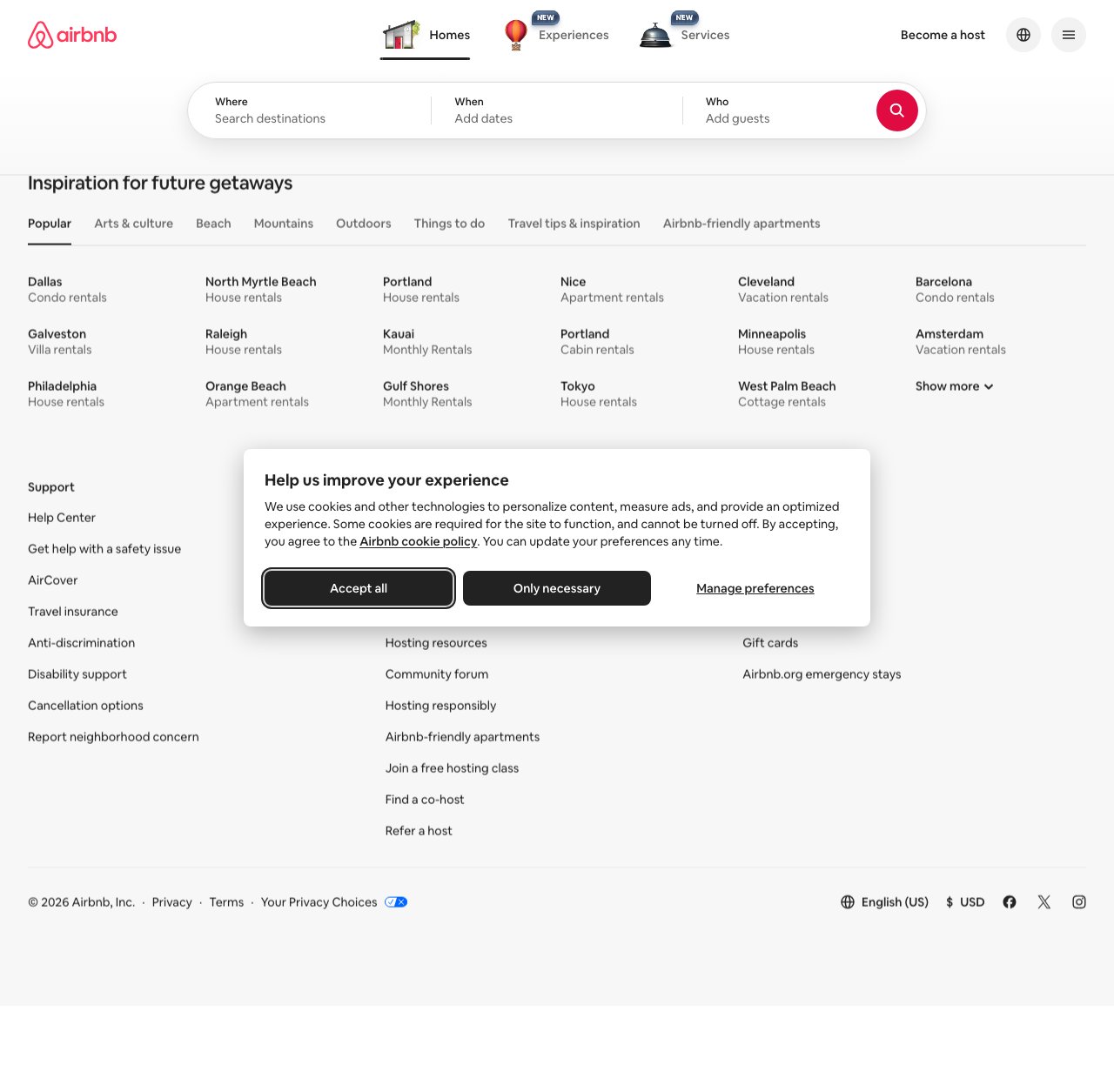
“The search bar's clean, destination grid is straightforward. Barcelona, Amsterdam — places worth exploring. One click gets me to specifics. That works.”
“The 'Inspiration for future getaways' framing appeals to me. I'd click through the categories to explore, though I'd want pricing before committing to dates.”
“Where are the reviews? I see badges everywhere in retail — star counts, verified buyer tags. This page feels hollow without them. How do I know these destinations are actually worth visiting?”
These elements tested well — preserve them as you iterate.
Here's what to fix first — then resubmit and we'll verify.
Add star ratings and review counts to every destination card
Users explicitly flagged the absence of reviews as a dealbreaker — 'this page feels hollow without them.' Comparison-shoppers, who make up a significant share of the audience, rely on social proof before committing to any search. Adding aggregate ratings (e.g., '4.87 ★ · 2,400+ stays') to each destination card directly addresses the top hesitation cited across the audience.
If you skip this: Comparison-shoppers will exit to a competitor that shows ratings before they ever run a search.
Surface price anchors on destination cards — even a 'from $X/night' range
Multiple users said they'd explore but wouldn't commit without pricing context. Comparison-shoppers specifically need a cost signal before investing time in a search. A 'from $89/night' label per destination removes the uncertainty that's sending users to scroll endlessly or leave.
If you skip this: Price-sensitive users will open a competitor tab to benchmark costs and may not return.
Replace the generic destination grid intro with one urgency or personalization signal
The 'Inspiration for future getaways' heading is passive — it invites browsing, not action. Impulse buyers need a reason to act now. Consider swapping to a dynamic label like 'Trending this weekend' or 'Popular near you' to create recency and relevance without a full personalization build.
Not legal advice — flags for your compliance team.
Tick these off as you work through them.
For your VP, stakeholders, or anyone who wants the full picture.
Generated by Prior.Run — Know before you build.